
Unlocking Hidden Revenue

📑 Table of Contents
- 1. Executive Summary
- 2. Introduction: The Retail Media Monetization Opportunity
- 3. The Publisher's Dilemma: Balancing Yield, Quality, and User Experience
- 4. The Challenge: Overcoming the Programmatic Stigma
- 5. The Strategic Framework: A Four-Pillar Approach to Premium Monetization
- 6. Results: Quantifying the Success of a Holistic Strategy
- 7. Analysis: Key Success Factors and Lessons for the Industry
- 8. Conclusion: Building a Sustainable and Scalable Revenue Engine
- 9. Appendix: Glossary of Programmatic Terms
1. Executive Summary
The digital advertising landscape is fiercely competitive, and for retail publishers, vast swathes of unsold, "unfilled" inventory represent a significant untapped revenue stream. However, the path to monetization is fraught with perceived risks: the fear of cheapening inventory through open auction programmatic channels, compromising ad quality, and damaging user experience.
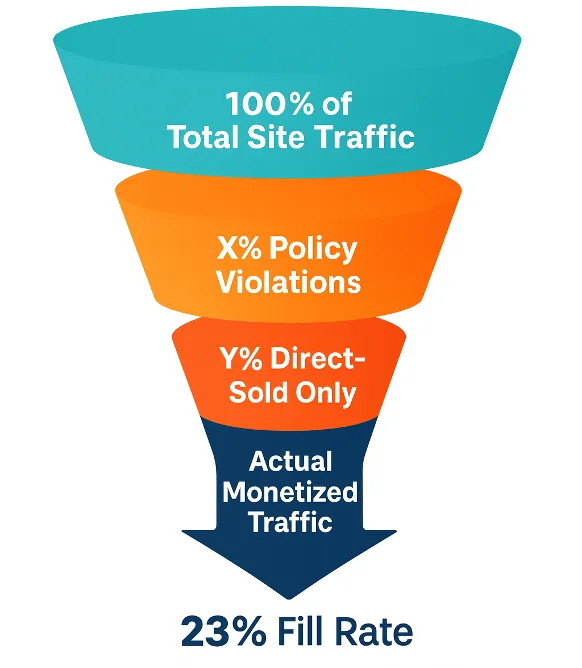
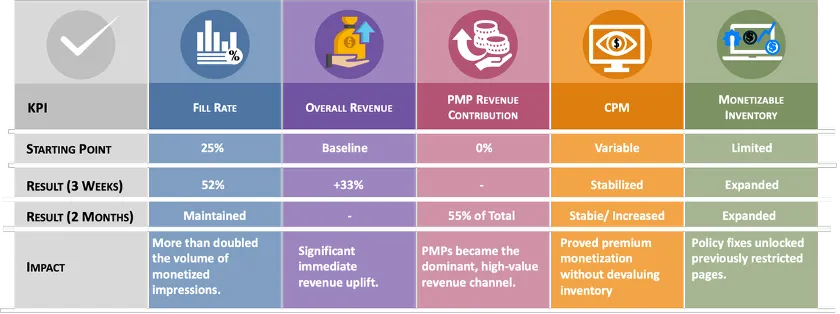
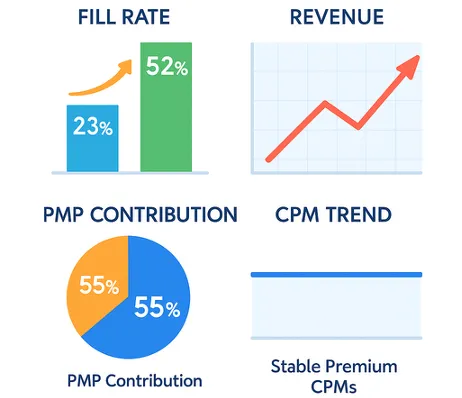
This white paper details a successful, strategic monetization transformation for a retail publisher. Moving beyond a simple "turn on programmatic" approach, we implemented a sophisticated, four-pillar framework focused on data-driven optimization, granular inventory segmentation, premium Private Marketplace (PMP) deals, and rigorous policy compliance. The results were transformative: a fill rate increase from 23% to 52% within three weeks, a 33% overall revenue uplift in the first month, and a 55% revenue contribution from PMPs within two months—all while maintaining stable CPMs and ad quality. This paper provides a proven blueprint for any publisher seeking to unlock hidden revenue without sacrificing the premium value of their inventory or their user experience.
2. Introduction: The Retail Media Monetization Opportunity
Retail media is one of the fastest-growing segments in digital advertising. Publishers with high-intent audience data possess incredibly valuable inventory. However, many rely solely on direct-sold campaigns, which, while high-value, often leave a substantial portion of pageviews unmonetized. This "remnant" or "unfilled" inventory is not low-quality; it is simply uncontracted. The challenge lies in monetizing this inventory efficiently and at a premium, avoiding the race-to-the-bottom pricing often associated with uncontrolled open auctions. This requires a strategic, nuanced approach that treats unfilled inventory not as remnant, but as undiscovered value.
3. The Publisher's Dilemma: Balancing Yield, Quality, and User Experience
The core dilemma for publishers venturing into programmatic monetization is a triple constraint:
- Maximize Yield: Generate the most revenue from every impression.
- Maintain Premium CPMs: Protect the value of the inventory and avoid cannibalizing direct-sale deals.
- Ensure Ad Quality & UX: Serve relevant, non-intrusive, and brand-safe ads to maintain user trust and site engagement.
Traditional, broad-brush programmatic tactics often fail this balance, prioritizing fill rate at the expense of CPM and user experience. Our framework is designed to succeed on all three fronts simultaneously.
4. The Challenge: Overcoming the Programmatic Stigma
The client, a retail publisher, faced specific, common hurdles that prevented them from capitalizing on this opportunity.
4.1. Fear of Revenue Cannibalization
The primary concern was that opening up to programmatic demand would flood the market with their inventory, driving down CPMs and devaluing their direct-sales business.
4.2. The Policy Compliance Roadblock
Several site pages were flagged for policy violations (e.g., inappropriate content, data collection issues), which restricted ad serving entirely on those pages, artificially capping their monetizable inventory pool.
4.3. The Traffic Optimization Puzzle
As a retail site, traffic was highly variable, driven by promotions, seasonality, and time of day. Monetization strategies needed to be dynamic enough to capitalize on these patterns.
5. The Strategic Framework: A Four-Pillar Approach to Premium Monetization
The solution was a holistic approach that addressed each challenge with a dedicated strategic pillar.
- Pillar 1: Performance Monitoring & Dynamic Optimization (The Foundation)
- Pillar 2: Strategic Inventory Segmentation & Granular Targeting (The Science)
- Pillar 3: Premium Demand Activation via PMPs (The Premium Channel)
- Pillar 4: Policy Compliance & Inventory Remediation (The Enabler)
5.1 Pillar 1: Performance Monitoring & Dynamic Optimization
You cannot optimize what you do not measure. The first pillar established a culture of data-driven decision-making.
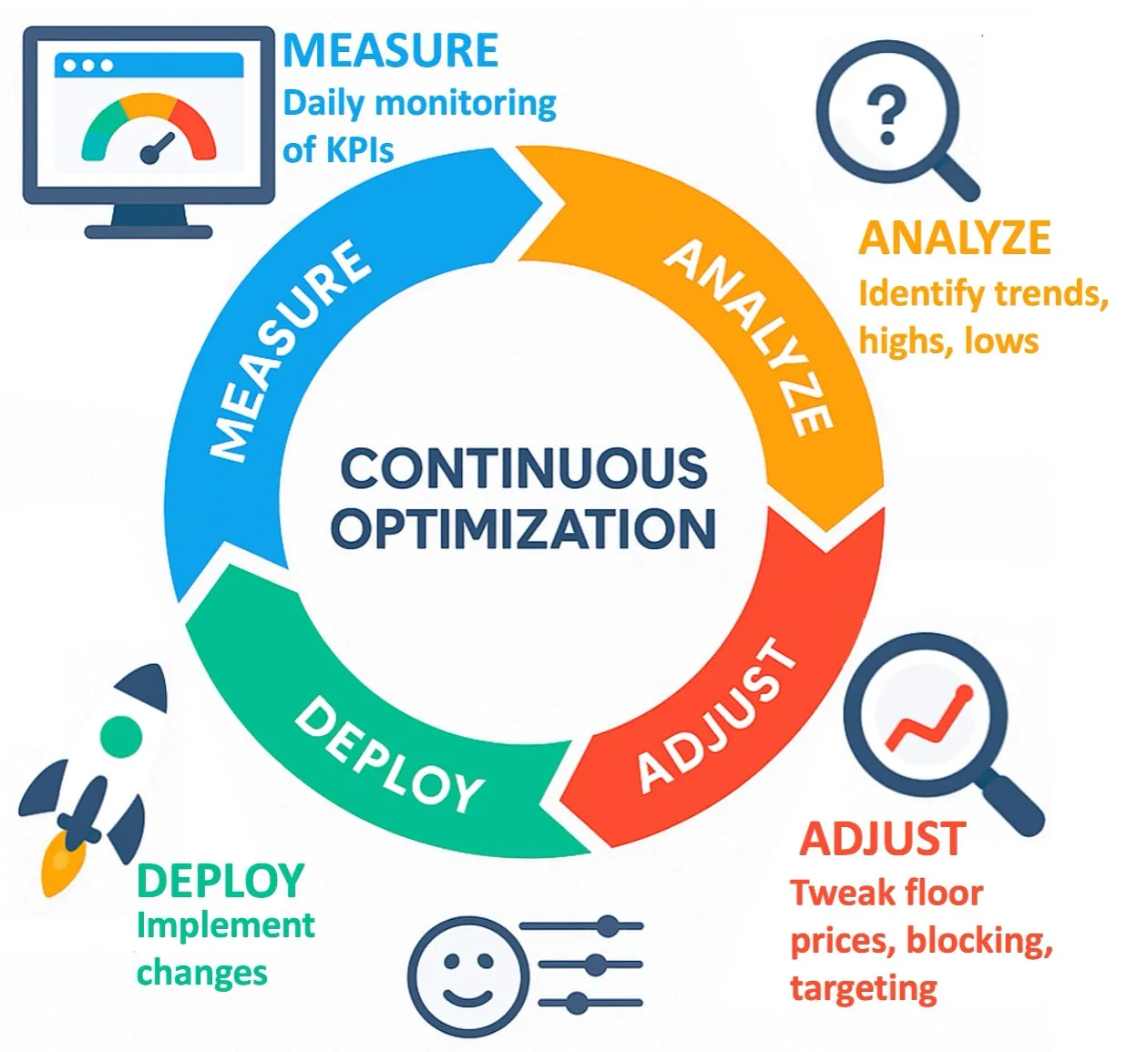
- The Daily Health Check: Instituted daily reporting on core metrics: Revenue, Fill Rate, CPM, and Active Advertisers. This provided an immediate pulse on performance and early detection of trends.
- Category Blocking: Proactively blocked low-value or brand-unsafe ad categories (e.g., gambling, partisan politics) to protect brand equity and user experience.
- Dynamic Floor Pricing: Instead of a static price floor, we implemented a dynamic strategy. Floor prices were adjusted based on real-time demand, time of day, and page value, ensuring we never sold inventory for less than it was worth while maximizing competition.
5.2 Pillar 2: Strategic Inventory Segmentation & Granular Targeting
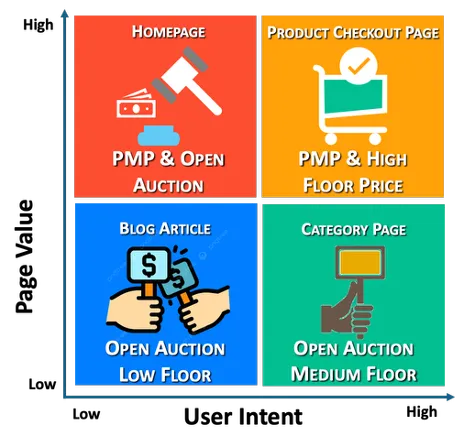
Not all inventory is created equal. The second pillar involved moving from a one-size-fits-all approach to a nuanced, segmented strategy.
- From Broad to Targeted: We began with broader audience targeting to establish a baseline and then used performance data to refine segments.
- Granular Targeting Rules: Implemented advanced targeting by:
- Placement: Homepage vs. product page vs. checkout page.
- Advertiser Category: Allowing premium brands to target more exclusively.
- Geography: Adjusting bids and floors based on the value of users in different locations.
5.3 Pillar 3: Premium Demand Activation via Private Marketplaces (PMPs)
PMPs were the key to overcoming the fear of low CPMs. They allow for curated, invitation-only auctions with premium advertisers.
- Curating Demand: We identified and invited high-value advertisers whose brands aligned with the publisher's audience.
- Maximizing CPMs: By creating competition among a select group of premium buyers in a PMP, we drove up CPMs significantly compared to the open auction, validating the inventory's premium value.
5.4 Pillar 4: Policy Compliance & Inventory Remediation
This pillar focused on unlocking the inventory that was completely off the table.
- Partnering with Platforms: Worked directly with Google (and other ad tech partners) to understand and resolve policy violation flags.
- Technical Remediation: Collaborated with the client's web development team to fix underlying issues (e.g., slow page speed, improper tag implementation) that were causing pages to be deemed non-compliant.
- Impact: Every page remediated represented a net new source of revenue, directly increasing the monetizable inventory pool.
6. Results: Quantifying the Success of a Holistic Strategy
The integrated four-pillar approach delivered dramatic results across every key metric.
7. Analysis: Key Success Factors and Lessons for the Industry
- Data is Non-Negotiable: Daily monitoring and analysis are the bedrock of effective yield optimization.
- Segmentation is Value Creation: Treating all inventory the same leaves money on the table. Granular segmentation unlocks premium value.
- PMPs are a Premium Channel, Not an Afterthought: A curated PMP strategy is essential for protecting brand value and maximizing CPMs.
- Compliance is a Revenue Center, Not a Cost Center: Investing time in fixing policy issues directly unlocks new revenue streams.
- Dynamic Beats Static: Static floor prices and set-and-forget strategies are ineffective. The market is dynamic and so must be the monetization approach.
8. Conclusion: Building a Sustainable and Scalable Revenue Engine
This case study demonstrates that programmatic monetization, when executed with a strategic, multi-faceted framework, is not a risk to be feared but a massive revenue opportunity to be embraced. By moving beyond simplistic solutions and adopting a disciplined approach centered on data, segmentation, premium demand, and compliance, publishers can transform their unfilled inventory from a wasted asset into a high-performing, sustainable revenue engine. The result is a win-win: maximized yield for the publisher and premium, brand-safe advertising opportunities for brands.
9. Appendix: Glossary of Programmatic Terms
- Fill Rate: The percentage of ad impressions that are successfully filled with an ad.
- eCPM (Effective Cost Per Mille): The effective revenue earned per one thousand impressions.
- Open Auction: A public, real-time auction where any advertiser can bid on inventory.
- Private Marketplace (PMP): An invitation-only auction where publishers offer inventory to a select group of premium advertisers.
- Floor Price: The minimum price a publisher is willing to accept for an impression.
- Ad Serving: The technology and process of placing an ad on a webpage.
Case study: Retail publisher · Fill rate +29% pts, revenue +33% in first month DOWNLOAD PDF VERSION