
From Tribal Knowledge to Institutional Intelligence

📑 Table of Contents
- 1. Executive Summary
- 2. Introduction: The High Cost of "Tribal Knowledge"
- 3. The Pre-Intervention Landscape: Diagnosing a Fragile Knowledge Ecosystem
- 4. The Strategic Imperative: Shifting from Tacit to Explicit Knowledge
- 5. The Solution Framework: A Two-Pillar Approach to Knowledge Institutionalization
- 6. Measuring Impact: Quantitative and Qualitative Results
- 7. Analysis: Key Success Factors and Lessons Learned
- 8. The Future-State: Advanced Knowledge Management
- 9. Conclusion: Building a Resilient, Scalable, and Learning Organization
- 10. Appendix: Starter Kit for Launching a KM Initiative
1. Executive Summary
In the modern economy, an organization's most valuable asset is not its technology or its products—it is the collective knowledge of its people. However, when this knowledge remains siloed in the minds of a few experts—a state known as "tribal knowledge"—it becomes a critical liability. This white paper details a strategic initiative to combat this risk, transforming a company plagued by inefficient training, productivity loss, and vulnerability to employee attrition into a resilient "learning organization."
Through a two-pillar framework focused on (1) Structured Training Manuals and (2) a Centralized Knowledge Base (KB), the company successfully codified tacit expertise into explicit, institutional intelligence. The results were profound: the elimination of knowledge loss upon employee exit, a drastic reduction in productivity-draining repetitive queries, faster and more consistent employee onboarding, and the establishment of a foundation for long-term business continuity. This paper provides a replicable blueprint for any organization seeking to mitigate risk, enhance efficiency, and build a culture of continuous learning and knowledge sharing.
2. Introduction: The High Cost of "Tribal Knowledge"
"Tribal knowledge" refers to unwritten, unrecorded information that is known within a group but not shared across the organization. While it makes experts feel indispensable, it creates immense operational risk:
- Attrition Risk: When a key employee leaves, their expertise walks out the door with them.
- Inefficiency: Colleagues waste countless hours interrupting experts for answers to repetitive questions.
- Inconsistency: Without standardized procedures, different employees perform the same task in different ways, leading to quality fluctuations and errors.
- Scaling Barriers: Onboarding new hires is slow and ineffective, hindering growth.
Transitioning from tribal knowledge to a culture of documented, shared knowledge is not an IT project; it is a strategic imperative for resilience and scalability.
3. The Pre-Intervention Landscape: Diagnosing a Fragile Knowledge Ecosystem
The client's organization exhibited classic symptoms of a weak knowledge management foundation.
3.1. The "Hit-by-a-Bus" Risk: Vulnerability to Attrition
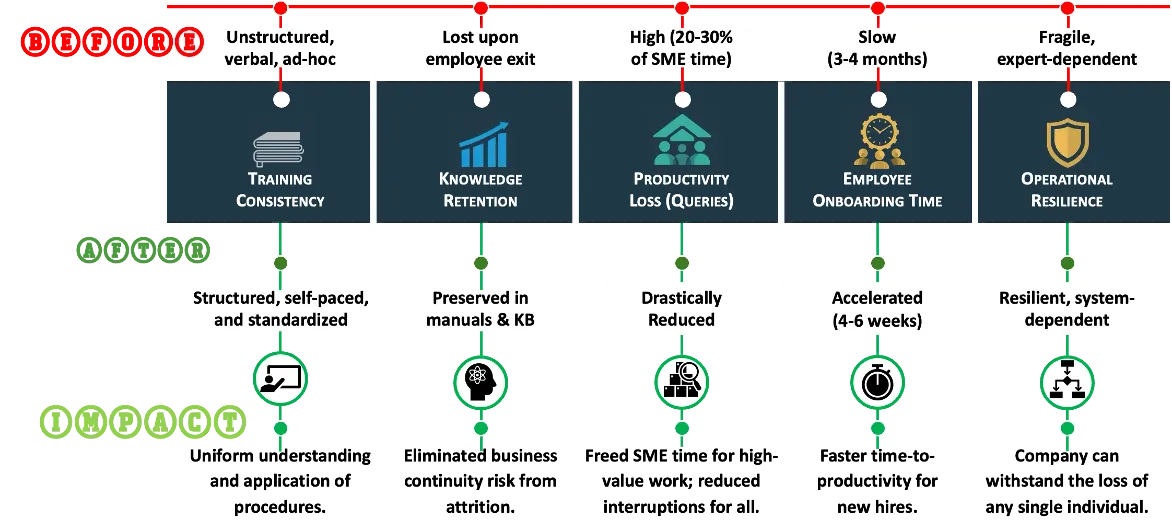
Critical processes and problem-solving techniques existed only in the minds of long-tenured employees. The departure of any single expert could cripple a function, creating a significant business continuity risk.
3.2. The Productivity Drain: The Cost of Repetitive Queries
High-performing employees (SMEs) spent an estimated 20-30% of their time answering the same questions from colleagues, diverting them from high-value, strategic work. This created a double productivity loss: for the asker and the expert.
3.3. The Inconsistency Tax: Varied Outputs and Training
New hires received inconsistent training based on who was available to train them, leading to varied understanding and application of procedures. This resulted in errors, rework, and a lack of standardized best practices.
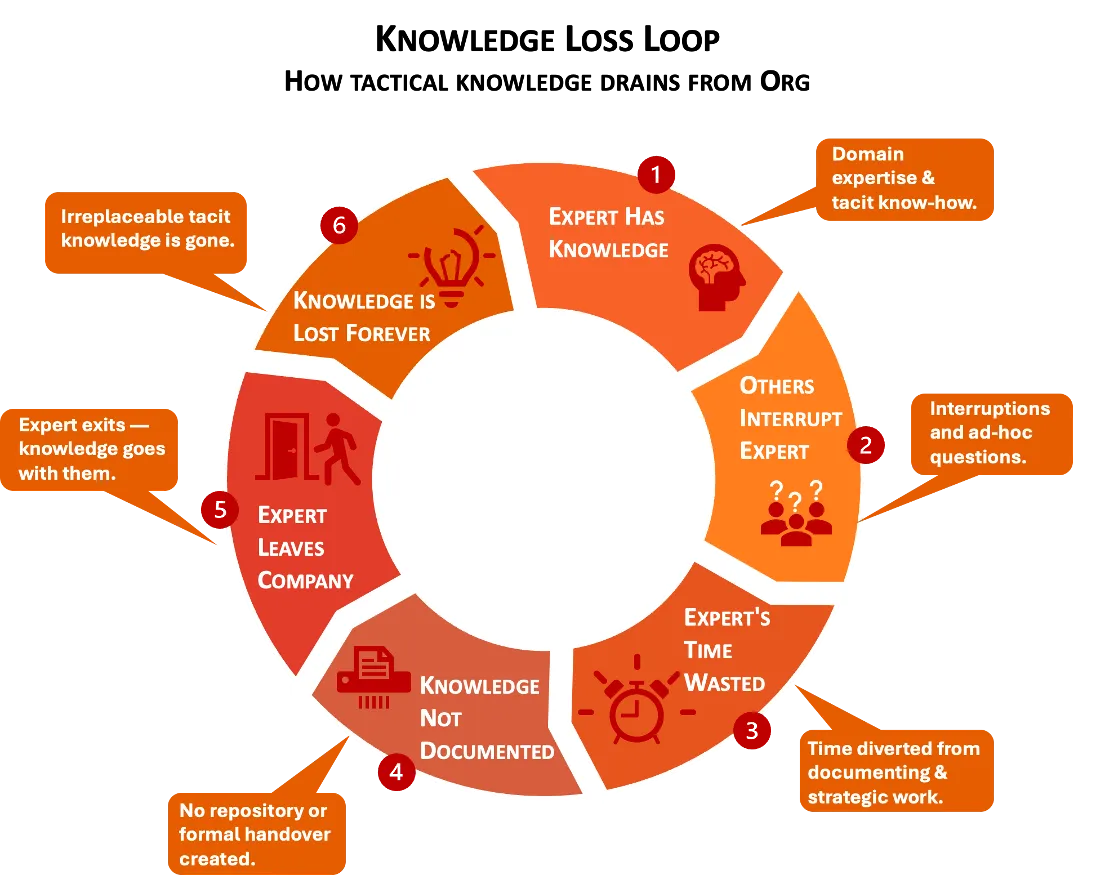
4. The Strategic Imperative: Shifting from Tacit to Explicit Knowledge
The solution required a fundamental shift from tacit knowledge (inherent, personal, hard to formalize) to explicit knowledge (codified, documented, easily shared). This process of conversion is the core of Knowledge Management (KM).
5. The Solution Framework: A Two-Pillar Approach to Knowledge Institutionalization
The transformation was engineered around two core, interdependent pillars.
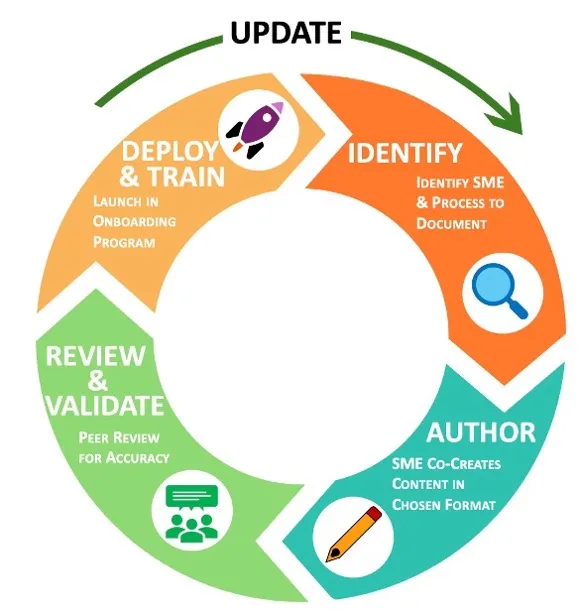
5.1 Pillar 1: Structured Training Manuals — Codifying Expertise
This pillar focused on capturing and standardizing the core processes required to perform a job function.
- The Co-Creation Model: A team of top performers was assembled not just to provide input, but to actively author the training materials. This ensured the content reflected real-world best practices, not theoretical ideals.
- Multi-Modal Learning: Recognizing that people learn differently, materials were created in various formats:
- Step-by-Step Guides (PDFs): For detailed, referenceable procedures.
- Instructional Videos: For visual learners, demonstrating complex tasks.
- PPTs & Self-Learning Modules: For structured, self-paced onboarding.
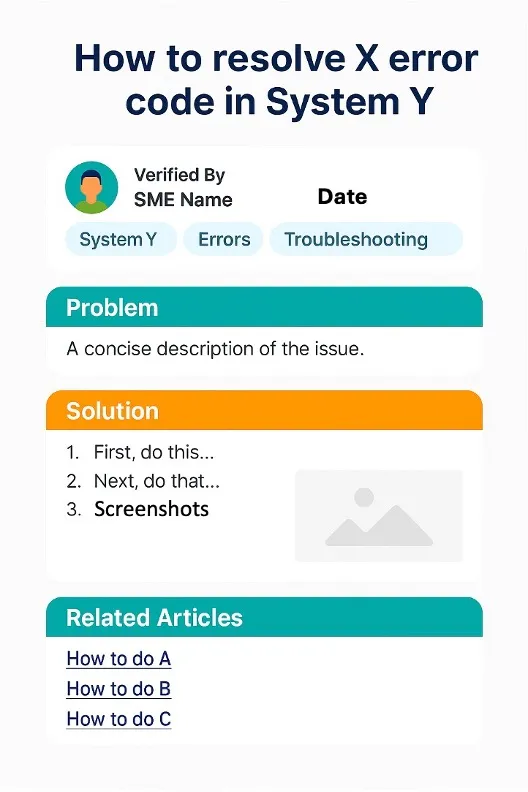
5.2 Pillar 2: The Centralized Knowledge Base — The Single Source of Truth
While training manuals teach how to do a job, the Knowledge Base answers what to do when a specific problem arises.
Design Principles:
- Searchable: A powerful search function is non-negotiable.
- Authoritative: Every entry is owned and verified by a designated SME.
- Accessible: Cloud-based and available to all employees from anywhere.
The Role of SMEs as Curators: SMEs transitioned from being human answer machines to knowledge curators. Their role became documenting solutions to common problems in the KB, which then served employees 24/7.
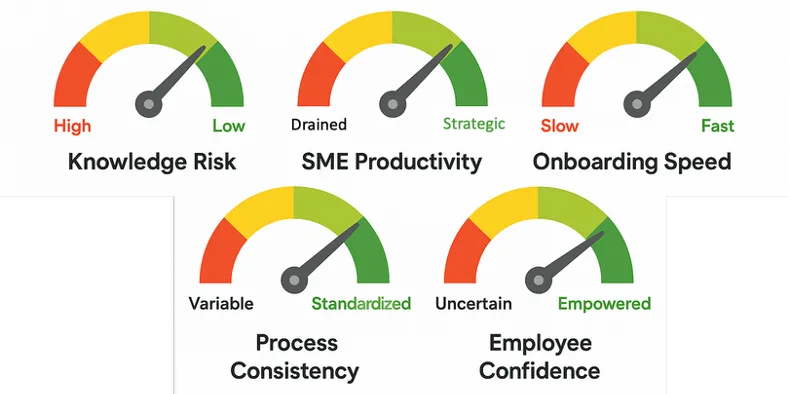
6. Measuring Impact: Quantitative and Qualitative Results
The implementation of the two-pillar framework delivered measurable value across operational and cultural dimensions.
7. Analysis: Key Success Factors and Lessons Learned
- Leadership Buy-in: This is a cultural change. Leadership must champion the initiative and allocate resources (especially SME time).
- SME Engagement: SMEs must be recognized and rewarded for their role as curators, not just doers. Their contribution to knowledge sharing is a value multiplier.
- User-Centric Design: The KB and manuals must be incredibly easy to use and search. If it's easier to ask a person, people will.
- Iterative Process: Knowledge management is never "done." Processes change, new problems arise. A governance model for ongoing updates is critical.
8. The Future-State: Advanced Knowledge Management
The foundation laid by this initiative enables more advanced capabilities:
- Gamification: Introducing points, badges, and leaderboards for KB contributions and course completions to drive engagement.
- Advanced Analytics: Using KB search data to identify knowledge gaps (e.g., what are people searching for but not finding?).
- AI-Powered Search: Implementing natural language processing and chatbots to make the KB even more intuitive to use.
- Integration with Workflows: Embedding KB links directly into ticketing systems and software tools for contextual help.
9. Conclusion: Building a Resilient, Scalable, and Learning Organization
The journey from tribal knowledge to institutional intelligence is a transformative one that pays dividends across the organization. It is a strategic investment in risk mitigation, operational efficiency, and cultural health. By codifying knowledge into structured training and a dynamic knowledge base, companies do not just document what they know—they build a learning organization that is resilient to change, scalable for growth, and empowered for innovation. In a world of constant change, your documented knowledge is your greatest insurance policy and competitive advantage.
10. Appendix: Starter Kit for Launching a KM Initiative
- Pilot Project Selection Guide: How to choose a low-risk, high-impact process to document first.
- SME Invitation Template: A email template to invite subject matter experts to participate, explaining the "why" and their value.
- KB Article Template: A standardized template for creating new knowledge base entries.
- Success Metrics Worksheet: A simple sheet to track key metrics before and after implementation.
Case study: Global operations team · 70% reduction in SME query time, 50% faster onboarding DOWNLOAD PDF VERSION