
The Ad Tech Stack Overhaul

📑 Table of Contents
- 1. Executive Summary
- 2. Introduction: The Digital Publishing Revenue Paradox
- 3. The Pre-Optimization Landscape: A Diagnosis of Disorganized Monetization
- 4. The Strategic Framework: A Three-Pillar Optimization Model
- 5. The Implementation Journey: A Phased Approach
- 6. Results: Quantifying the Transformation
- 7. Analysis: Key Success Factors and Lessons Learned
- 8. Conclusion: Building a Future-Proof Revenue Engine
- 9. Appendix: Checklist for Ad Tech Stack Optimization
1. Executive Summary
In the competitive world of digital publishing, particularly in high-traffic verticals like sports, many organizations possess a hidden asset: vast, untapped ad inventory across multiple web properties and mobile applications. This white paper details a comprehensive ad tech optimization project for a leading cricket sports website that successfully transformed its disjointed monetization approach into a streamlined, high-yield revenue engine.
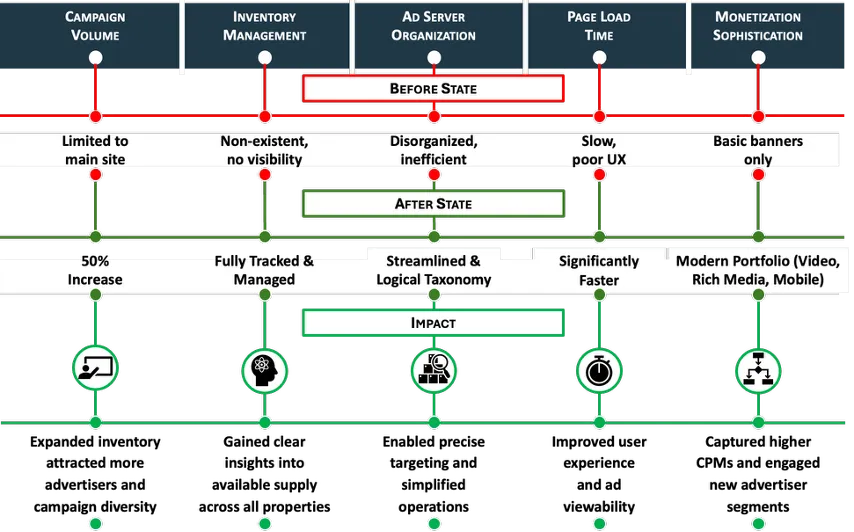
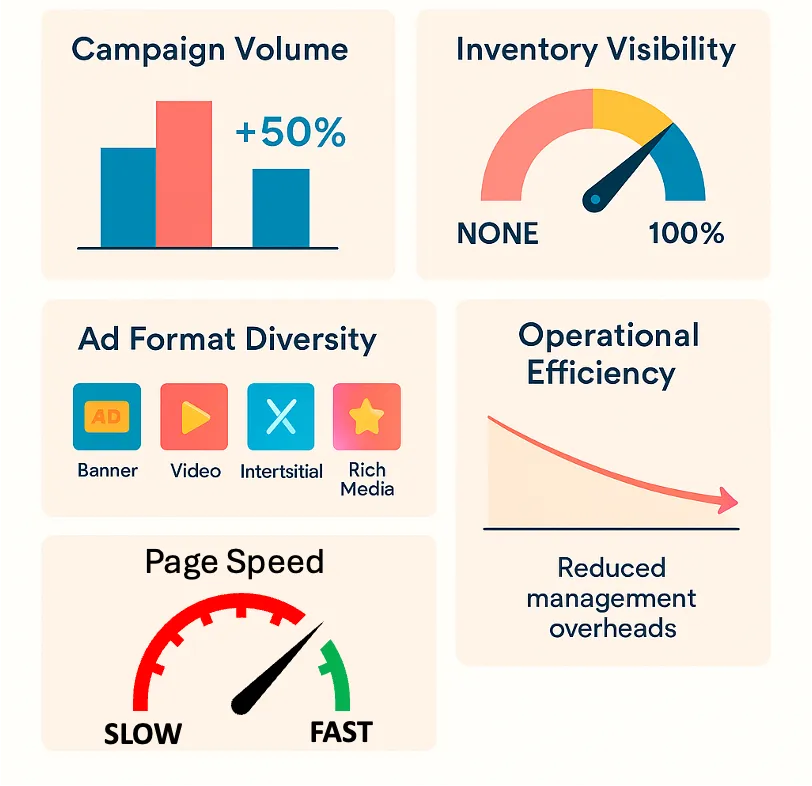
Faced with a disorganized Google Ad Manager (GAM) setup, a complete lack of mobile and video ad units, and a fragmented site structure, the publisher implemented a strategic three-pillar framework: (1) Ad Format & Inventory Expansion, (2) Ad Server & Taxonomy Reconstruction, and (3) Technical & UX Optimization. The results were transformative: a 50% increase in campaign volumes, the establishment of proper inventory management and tracking, faster page load times, and a modernized, engaging ad experience. This paper provides a proven blueprint for any publisher seeking to unlock hidden revenue, streamline operations, and build a scalable, future-proof monetization strategy.
2. Introduction: The Digital Publishing Revenue Paradox
Digital publishers often focus on driving audience growth, believing that increased traffic will automatically translate to higher advertising revenue. However, this is only half the equation. The other half is monetization efficiency—the ability to maximize revenue from every single pageview and user interaction. Many publishers, especially those who have grown through acquisitions or organic expansion, find themselves with a complex, fragmented ad tech stack that leaks revenue at every turn. This case study examines how one publisher turned this paradox into a profit center by treating its ad tech infrastructure as a strategic asset.
3. The Pre-Optimization Landscape: A Diagnosis of Disorganized Monetization
The client, a major cricket website with a portfolio of over 15 sites and apps, was a classic example of untapped potential.
3.1. The Untapped Inventory Empire
The primary website was monetized, but the 15+ other digital properties were effectively invisible to the ad market. This represented a massive, unused asset—akin to owning multiple storefronts but only opening one.
3.2. The Ad Server Chaos
The Google Ad Manager (GAM) instance was disorganized, with an unclear site hierarchy and inconsistent ad unit naming. This made it impossible to get a unified view of inventory, target specific sections effectively, or provide clear reporting to advertisers.
3.3. The Mobile Monetization Gap
With mobile traffic dominating sports media consumption, the lack of mobile-optimized ad formats (like interstitials and smart banners) and the absence of monetization within their native apps represented a critical strategic failure.
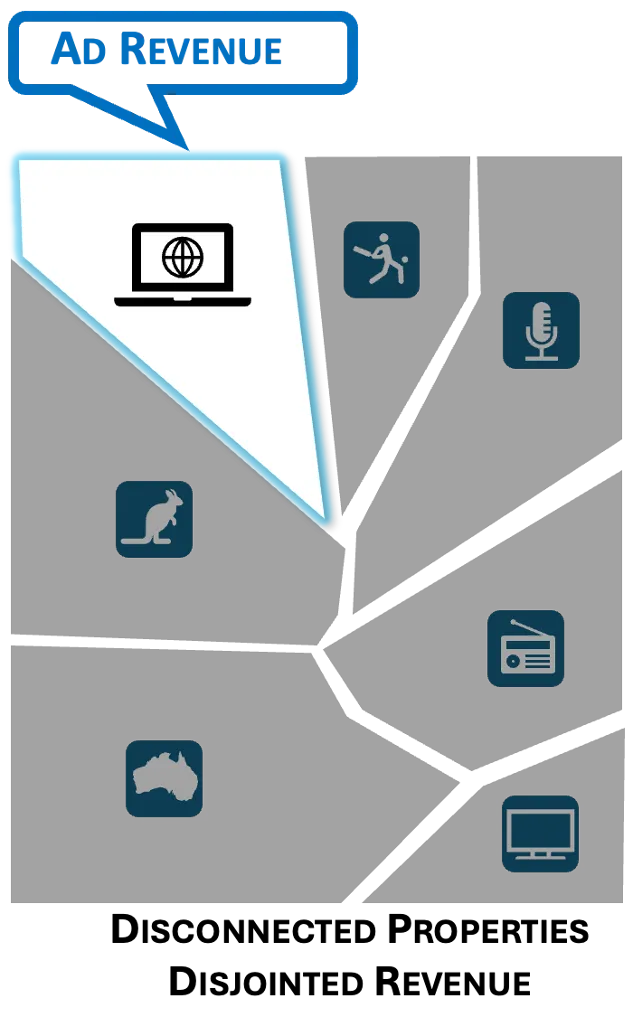
4. The Strategic Framework: A Three-Pillar Optimization Model
The solution was not a series of quick fixes but a holistic overhaul built on three core, interdependent pillars.
- Pillar 1: Ad Format & Inventory Expansion (The "What" - Product Offering)
- Pillar 2: Ad Server & Taxonomy Reconstruction (The "How" - Operational Backbone)
- Pillar 3: Technical & UX Optimization (The "Experience" - Performance Foundation)
4.1 Pillar 1: Ad Format & Inventory Expansion — Diversifying the Revenue Stream
The goal was to move beyond traditional banners and offer a diverse menu of high-impact, high-value ad products.
- Beyond the Banner: Introducing High-Value Formats:
- Video Players: Integrated out-stream and in-stream video ads, which command significantly higher CPMs than display.
- Rich Media: Enabled interactive ad units that drive higher engagement.
- Interstitial Ads: Full-screen ads that appear at natural transition points (e.g., between articles), highly effective on mobile.
- Conquering Mobile:
- Smart Banners & Full-Screen Banners: Implemented responsive ad units tailored for mobile web and in-app environments.

4.2 Pillar 2: Ad Server & Taxonomy Reconstruction — The Central Nervous System
A powerful ad server is useless without a logical, scalable structure. This pillar focused on building a clean, hierarchical taxonomy.
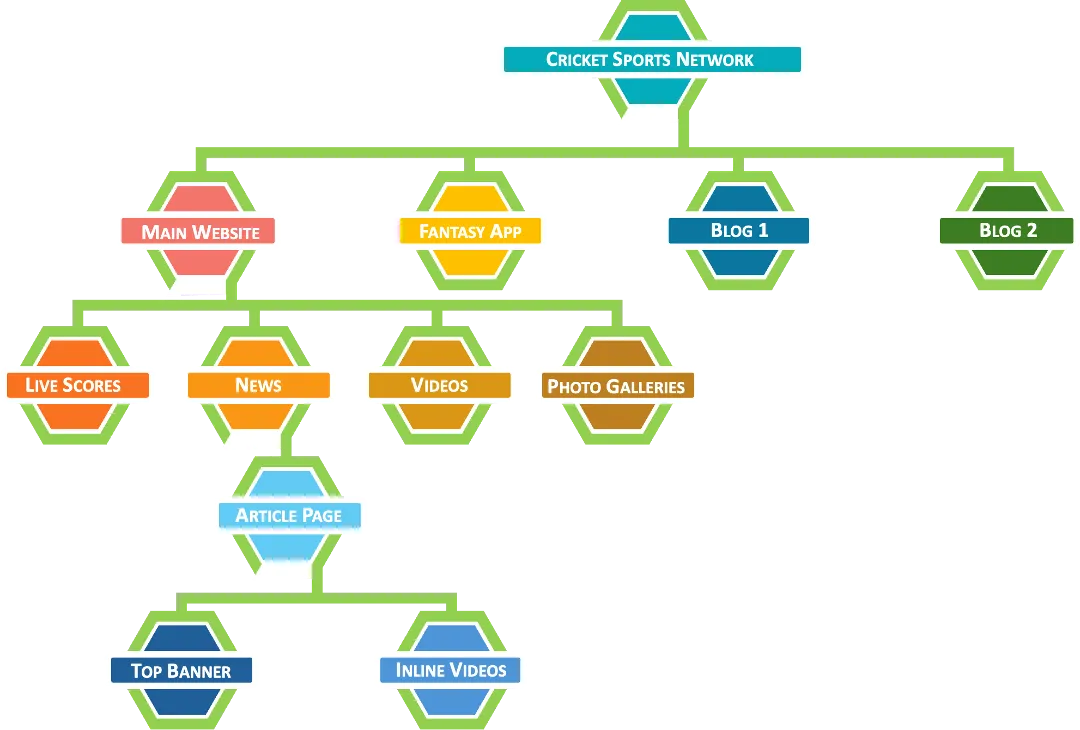
- Building a Scalable GAM Hierarchy: The entire portfolio of 15+ sites and apps was mapped and structured within GAM. This provided a single-pane-of-glass view for management.
- The 5-Level Ad Unit Structure for Precision: A detailed hierarchy was implemented for precise targeting and reporting:
- Level 1: Network (e.g., Cricket Sports Network)
- Level 2: Property (e.g., Main Website, Mobile App, Blog 1)
- Level 3: Section (e.g., Live Scores, News, Videos)
- Level 4: Page Type (e.g., Homepage, Article Page)
- Level 5: Placement (e.g., Top Banner, Sidebar, In-Content)
4.3 Pillar 3: Technical & User Experience (UX) Optimization — The Performance Engine
Slow pages hurt both users and revenue. This pillar ensured the technical foundation supported monetization goals.
- The Speed-Revenue Connection: Optimized page load times by compressing images, leveraging browser caching, and refining code. Faster pages improve user experience and ad viewability (a key metric for advertisers), leading to higher CPMs.
- Leveraging AMP and FBIA: Implemented Google's Accelerated Mobile Pages (AMP) and Facebook Instant Articles (FBIA). These technologies provide lightning-fast loading times on mobile, improving user retention and creating premium, fast-loading ad inventory that buyers value.
5. The Implementation Journey: A Phased Approach
The project was executed in phases to minimize disruption:
- Phase 1: Audit & Planning - Comprehensive analysis of the existing setup and definition of the new taxonomy.
- Phase 2: Ad Server Reconstruction - Restructuring GAM and deploying new tags across all properties.
- Phase 3: Format Expansion - Rolling out new ad formats (video, rich media, interstitials).
- Phase 4: Technical Optimization - Implementing page speed improvements, AMP, and FBIA.
6. Results: Quantifying the Transformation
The integrated three-pillar approach delivered dramatic results across key business metrics.
7. Analysis: Key Success Factors and Lessons Learned
- Holistic View is Essential: Tackling ad formats, ad server structure, and page speed in isolation is suboptimal. They are deeply interconnected and must be addressed together.
- Taxonomy is a Strategic Asset: A well-planned ad server hierarchy is not an IT task; it is the foundation for revenue control and growth.
- Mobile-First is Non-Negotiable: Monetization strategies must be designed for mobile users first, as they represent the majority of traffic in most verticals.
- User Experience Drives Revenue: There is no conflict between a good user experience and strong monetization. Faster, cleaner sites benefit both users and advertisers.
8. Conclusion: Building a Future-Proof Revenue Engine
For the cricket website, this project was more than a technical upgrade; it was a strategic repositioning. By overhauling its ad tech stack with a structured, three-pillar framework, the publisher transformed from an organization with hidden, underutilized assets into a sophisticated monetization engine. They unlocked new revenue streams, gained operational control, and future-proofed their business against the evolving demands of advertisers and users. This blueprint provides a clear path for any publisher ready to stop leaving money on the table and start maximizing the value of their digital real estate.
9. Appendix: Checklist for Ad Tech Stack Optimization
- Conduct a full inventory audit of all web and app properties.
- Map and design a logical ad server taxonomy (e.g., 5-level hierarchy).
- Audit current ad formats and identify gaps (Video? Rich Media? Mobile?).
- Benchmark page load times and identify technical bottlenecks.
- Develop a rollout plan for new tags, formats, and technical enhancements.
- Establish new key metrics for tracking success (e.g., viewability, format-level CPMs).
Case study: Leading cricket sports publisher · +50% campaign volume, full inventory monetization DOWNLOAD PDF VERSION