
The Fairness Algorithm

📑 Table of Contents
- 1. Executive Summary
- 2. Introduction: The Hidden Cost of Manual Work Allocation
- 3. The Pre-Implementation Landscape: A Diagnosis of Disarray
- 4. The Strategic Imperative: Why a Queue Management System (QMS)?
- 5. The Implementation Blueprint: A Phased Approach to Fairness
- 6. The Engine of Fairness: Key Features of the QMS
- 7. Measuring Impact: Quantitative and Qualitative Results
- 8. The Ripple Effect: Beyond Efficiency Gains
- 9. Analysis: Key Success Factors and Lessons Learned
- 10. The Future-State: AI, Predictive Analytics, and Continuous Evolution
- 11. Conclusion: Operational Fairness as a Competitive Advantage
- 12. Appendix: QMS Vendor Selection Checklist
1. Executive Summary
In the engine room of modern operations—where tickets, tasks, and requests are the core currency—how work is distributed is often the single greatest determinant of efficiency, employee morale, and client satisfaction. This white paper details a transformative initiative within a global operations team that replaced a manual, biased, and opaque task allocation system with an intelligent, automated Queue Management System (QMS).
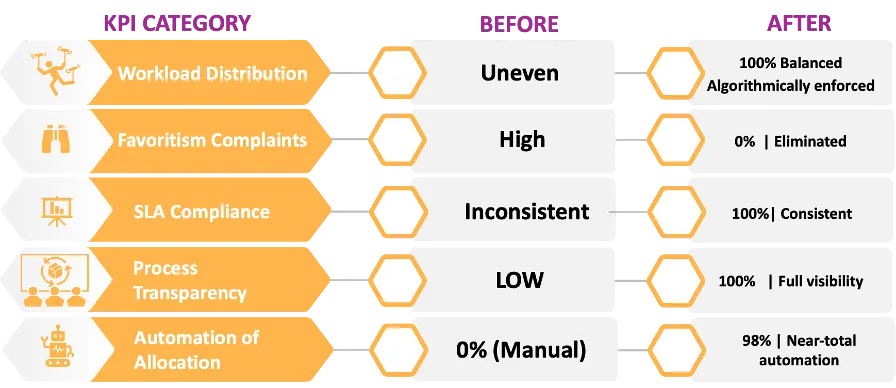
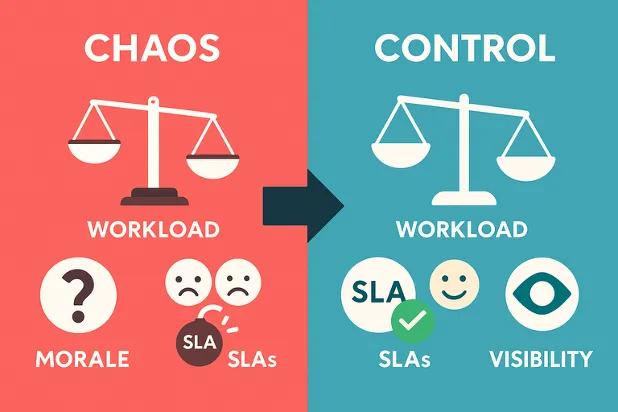
Plagued by allegations of favoritism, uneven workloads, missed SLAs, and a pervasive lack of visibility, the organization was trapped in a cycle of distrust and inefficiency. Through a meticulously planned four-phase implementation focused on transparency, automation, and fairness, the QMS delivered staggering results: 100% balanced workload distribution, 100% SLA compliance, and the complete elimination of favoritism complaints. This paper argues that a QMS is not merely a tactical tool but a strategic platform that fosters a culture of fairness, accountability, and continuous improvement, providing a replicable blueprint for any organization seeking to optimize its operational core.
2. Introduction: The Hidden Cost of Manual Work Allocation
In many organizations, the process of assigning work is deceptively simple: a manager, or the team itself, manually distributes incoming tasks. This approach, often based on intuition, proximity, or perceived skill, creates a host of hidden costs. It introduces human bias, obscures visibility into capacity and progress, and fosters perceptions of unfairness that can cripple team morale. For global teams with onshore and offshore components, these issues are magnified, leading to cultural friction and operational silos. The decision to implement a Queue Management System is, therefore, not just an operational upgrade but a cultural intervention aimed at installing fairness as a core operating principle.
3. The Pre-Implementation Landscape: A Diagnosis of Disarray
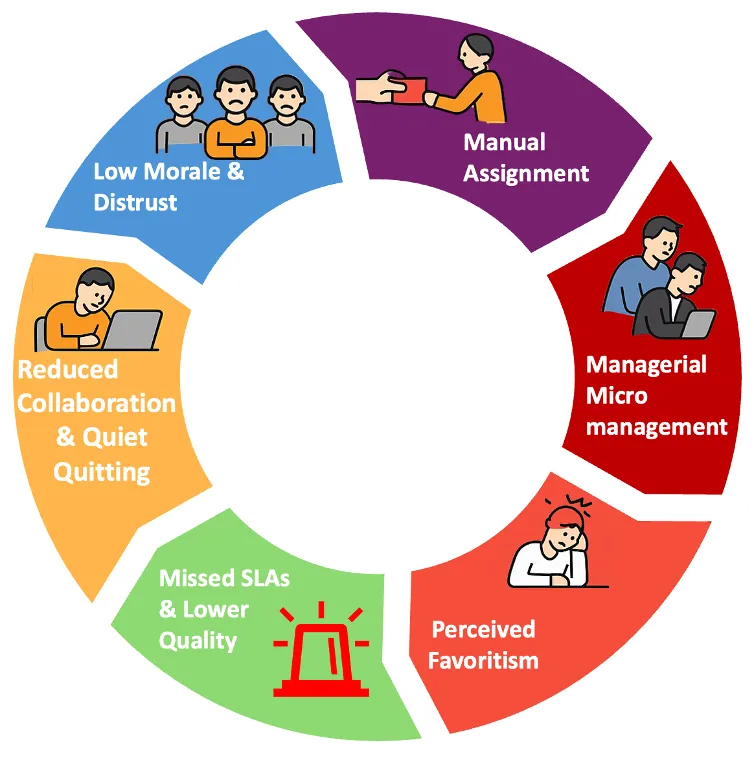
The client's operations exhibited a textbook case of allocation-induced chaos, characterized by four core dysfunctions.
The Four Pillars of Operational Dysfunction:
- Perceived Favoritism: Assignments were seen as biased, with "desirable" tasks going to certain individuals, eroding trust.
- Uneven Workloads: Some team members were chronically overloaded, leading to burnout, while others were underutilized, leading to disengagement.
- Operational Blindness: There was no real-time view of queue length, individual workloads, or impending SLA breaches.
- Reactive Prioritization: Tickets were worked on based on the "squeaky wheel" principle rather than objective criteria like urgency or SLA.
4. The Strategic Imperative: Why a Queue Management System (QMS)?
A QMS is a technology solution designed to automate, prioritize, and visualize the flow of work (tickets, tasks, requests) based on pre-defined business rules. Its strategic value lies in its ability to:
- Eliminate Bias: Automate allocation to remove human discretion and perceived favoritism.
- Optimize Efficiency: Ensure the right work goes to the right person at the right time.
- Provide Total Transparency: Offer a single source of truth for workload, status, and performance.
- Enforce Accountability: Create an immutable audit trail for every action.
5. The Implementation Blueprint: A Phased Approach to Fairness
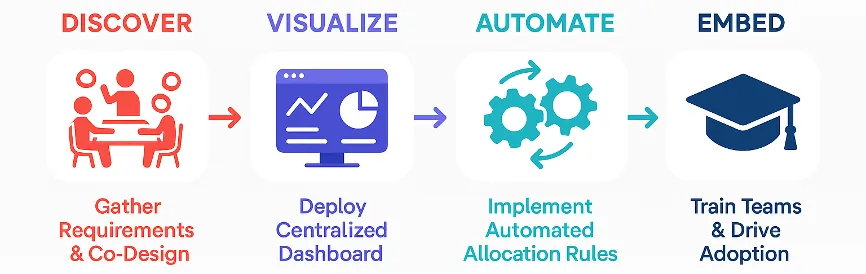
Success depended on a structured, collaborative rollout, not a sudden mandate.
5.1. Phase 1: Requirement Gathering & Co-Design
Action: Workshops were held with both onshore account managers and offshore delivery teams to understand pain points and gather input on desired features.
Outcome: This co-design approach ensured the solution was built for its users, fostering early buy-in and uncovering critical, on-the-ground insights.
5.2. Phase 2: The Centralized Dashboard — The Window to Operations
Action: A real-time dashboard was deployed, visible to all team members and leadership. It displayed open tickets, SLA timers, individual workloads, and team capacity.
Outcome: This single pane of glass eliminated questions about "who is doing what" and "what is the priority," creating unprecedented operational visibility.
5.3. Phase 3: The Rules of Fairness — Automating Allocation
Action: Intelligent business rules were codified into the system:
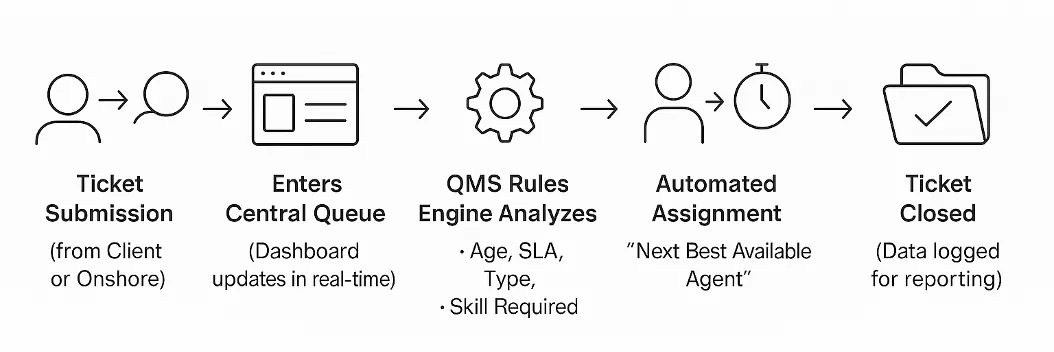
- First-In, First-Out (FIFO): Prioritizing tickets based on queue time to minimize SLA breaches.
- Skill-Based Routing: Automatically assigning complex tickets to agents with certified expertise.
- Load Balancing: Distributing new tickets to the next available agent with the lightest load.
5.4. Phase 4: Change Management — Winning Hearts and Minds
Action: Training sessions focused not just on "how" to use the system, but "why" it was being implemented—to create a fairer, more transparent workplace.
Outcome: Leadership advocacy was crucial in reframing the QMS from a monitoring tool to an empowerment tool that protected employees from bias and overload.
6. The Engine of Fairness: Key Features of the QMS
The implemented system was built on core principles that directly addressed the pre-existing dysfunctions.
- Transparency: A universal view of the queue for all.
- Fair Distribution: Algorithmic assignment based on rules, not relationships.
- Priority-Based Execution: SLA-driven prioritization to protect client commitments.
- Audit Trail: Comprehensive logging for performance analysis and accountability.
7. Measuring Impact: Quantitative and Qualitative Results
The impact of the QMS was immediate and measurable across both hard metrics and soft cultural factors.
8. The Ripple Effect: Beyond Efficiency Gains
The benefits extended far beyond the metrics:
- Enhanced Team Morale: The perception of fairness reduced internal conflict and created a more collaborative atmosphere.
- Empowered Leadership: Managers transitioned from micromanaging task to analyzing trends, coaching performance, and strategic planning.
- Strengthened Client Trust: 100% SLA compliance and predictable service delivery solidified client relationships.
- Data-Driven Insights: The audit trail provided rich data for analyzing bottlenecks and optimizing processes further.
9. Analysis: Key Success Factors and Lessons Learned
- Technology is an Enabler, Not the Solution: The QMS succeeded because it was implemented alongside a robust change management strategy that addressed cultural resistance.
- Co-Creation is Critical: Involving end-users in the design phase ensured the system met real needs and fostered a sense of ownership.
- Transparency is a Cultural Value: The dashboard was powerful because it made fairness visible and verifiable, building trust in the system itself.
- Define Rules Collaboratively: The business rules (FIFO, skill-based) must be developed with the team to ensure they are seen as fair and logical.
10. The Future-State: AI, Predictive Analytics, and Continuous Evolution
The current QMS is a foundation for an even more intelligent future:
- Predictive Analytics: Using historical data to forecast ticket volumes and proactively adjust staffing.
- AI-Powered Prioritization: Dynamically adjusting ticket priority based on real-time business impact, not just SLA deadlines.
- Sentiment Analysis: Automatically detecting frustrated clients from ticket content and prioritizing those responses.
11. Conclusion: Operational Fairness as a Competitive Advantage
The implementation of a Queue Management System transcends operational efficiency. It is a profound statement about an organization's values, demonstrating a commitment to fairness, transparency, and meritocracy. By systematically eliminating bias and opacity from work allocation, companies can unlock higher productivity, significantly improve employee morale, and deliver flawless service that builds unshakable client trust. In a world where talent and clients have more choices than ever, operational fairness is not just a best practice—it is a powerful competitive advantage.
12. Appendix: QMS Vendor Selection Checklist
- Core Functionality: Automated assignment, real-time dashboard, customizable business rules.
- Integration Capabilities: APIs to connect with existing ticketing systems (e.g., Jira, ServiceNow).
- Reporting and Analytics: Built-in reports on agent performance, SLA adherence, and queue metrics.
- Ease of Use: Intuitive interface for both administrators and end-users.
- Scalability: Ability to handle increased volume and complexity over time.
- Vendor Reputation & Support: Strong customer reviews and responsive support services.
Case study: Global operations team · 100% balanced workloads, 100% SLA compliance DOWNLOAD PDF VERSION